For nurses
Comfortable footwear to wear with scrubs

Scrubs get a lot of attention, but by the end of a twelve-hour shift most nurses are thinking about their feet. The right shoes protect you, support your legs and back, and make a long duty more bearable. The wrong ones can leave you sore for days.
We make scrubs, not shoes, so this is general guidance. Your hospital or college may also have footwear rules, especially for theatre and for students, so follow your institution’s uniform and infection-control policy.
What to look for
Good shoes for clinical work usually have:
- A closed toe to protect against dropped items, sharps and spills.
- A non-slip sole, important on wet ward floors and in the monsoon.
- Cushioning and arch support for long hours of standing.
- A secure fit at the heel so your foot does not slide.
- An upper that wipes clean, since splashes happen.
- Quiet soles, especially for night shifts.
Common choices
| Type | Good for | Watch out for |
|---|---|---|
| Closed clogs | Theatre, quick on and off | Choose a back strap if you move fast |
| Supportive walking shoes | Wards, ICU, long walking | Mesh tops can let liquids through |
| Plain leather or synthetic shoes | Formal or student uniforms | Can be stiff at first |
Open sandals and slippers are generally not suitable on clinical duty.
Colour and matching
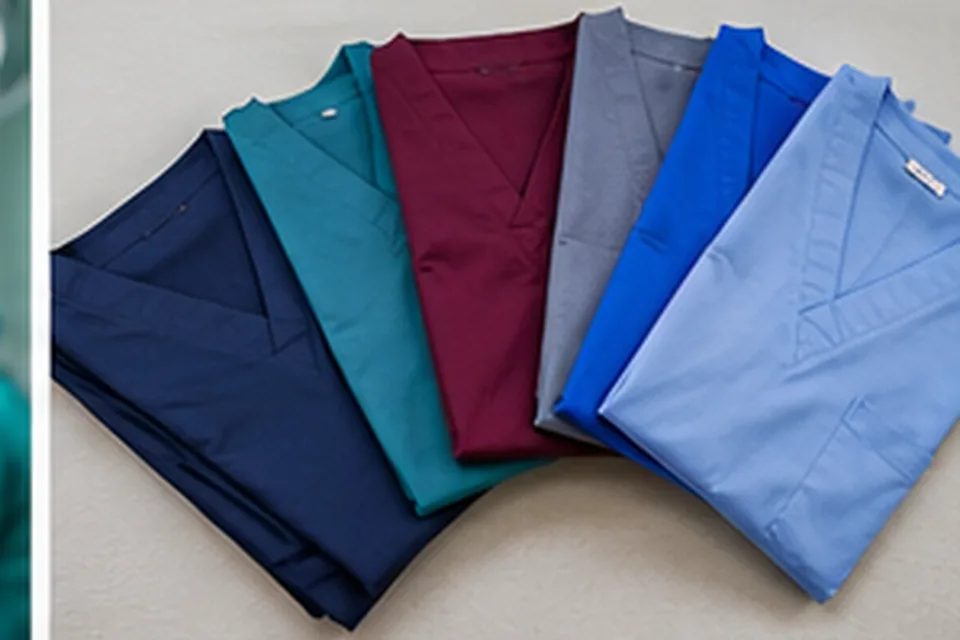
Many colleges ask for white shoes with white uniforms. With coloured scrubs, white, black or grey shoes all look neat. If your scrubs are navy, wine or grey, black shoes hide marks well; with ceil blue or teal, white shoes look fresh. Theatre often has separate footwear that stays inside the OT.
Socks matter too
- Choose cotton-rich socks that handle sweat.
- Avoid tight elastic that leaves marks after a long shift.
- Some nurses like mild compression socks for long standing; ask a doctor if you have any leg or circulation concerns.
- Keep a spare pair in your locker, especially in the rainy season.
Monsoon tips
Kerala’s rainy months are hard on footwear.
- Wear a separate pair for the commute and change at work if you can.
- Dry shoes fully between shifts; stuff them with newspaper overnight.
- Check soles for grip; worn soles are risky on wet floors.
Scrub length and shoes
Your pant length affects how your shoes work. Pants that drag on the floor get wet and dirty and can catch on clogs. Pants that are too short look odd and leave ankles cold in AC. A straight pant that just touches the top of your shoe is ideal. If you are tall or petite, our post on scrubs for tall and petite nurses can help.
When to replace shoes
Replace them when the cushioning feels flat, the sole is smooth, or your feet and back start to ache in ways they did not before. Like scrubs, shoes wear out; see how long scrubs last for the uniform side of the story.
Final word
Look for closed, non-slip, supportive shoes, pair them with good socks and keep a spare pair for the monsoon. Then make sure your scrub pant length suits them. Check our size chart before you order your next set.