OT & lab
Scrub caps: tie-back and other styles
A scrub cap is a small thing, but you notice a bad one quickly. It slides back halfway through a procedure, pinches behind your ears, or leaves strands of hair escaping at the neck. A good one you forget you are wearing.
There are several cap styles in use in hospitals. Here is how they differ, and who each one suits.
The tie-back cap
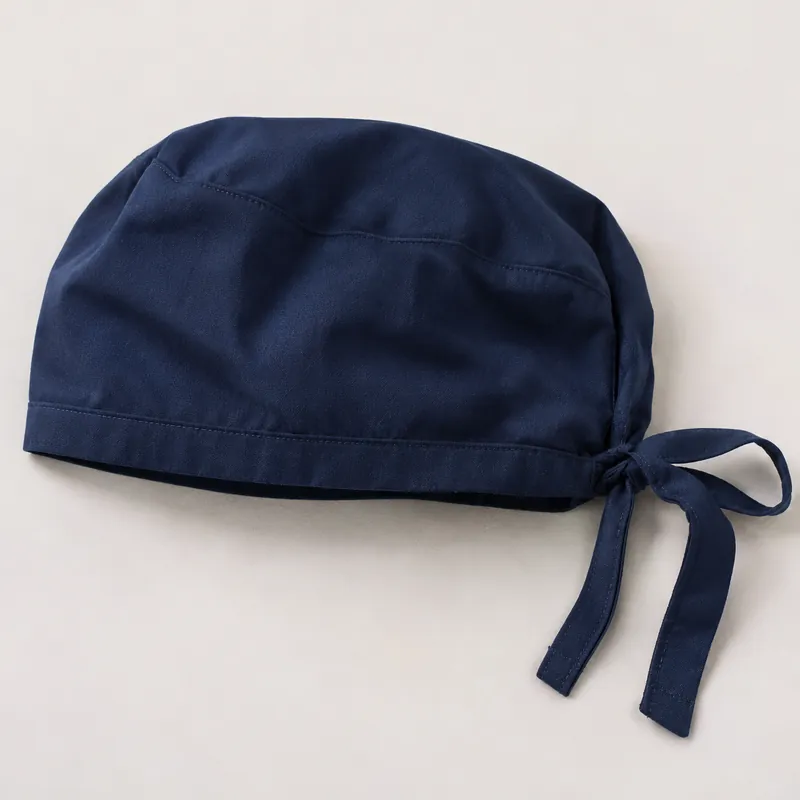
The tie-back cap is the most common reusable cloth cap. It covers the top and back of the head and fastens with two ties at the back, under any bun or ponytail.
- Adjustable: you control how snug it sits by how tightly you tie it.
- Fits most heads: one size works for a wide range, because the ties take up the difference.
- Neat look: sits close to the head and looks tidy in theatre or on wards.
It suits short hair, medium hair and hair tied in a low bun. Very long or thick hair may need a roomier style.
Other styles you will see
| Style | How it fits | Suits |
|---|---|---|
| Bouffant | Loose, puffed shape gathered with elastic all round | Long or thick hair that needs to be fully tucked in |
| Elastic-back | Like a tie-back but with elastic instead of ties | People who want to slip it on fast |
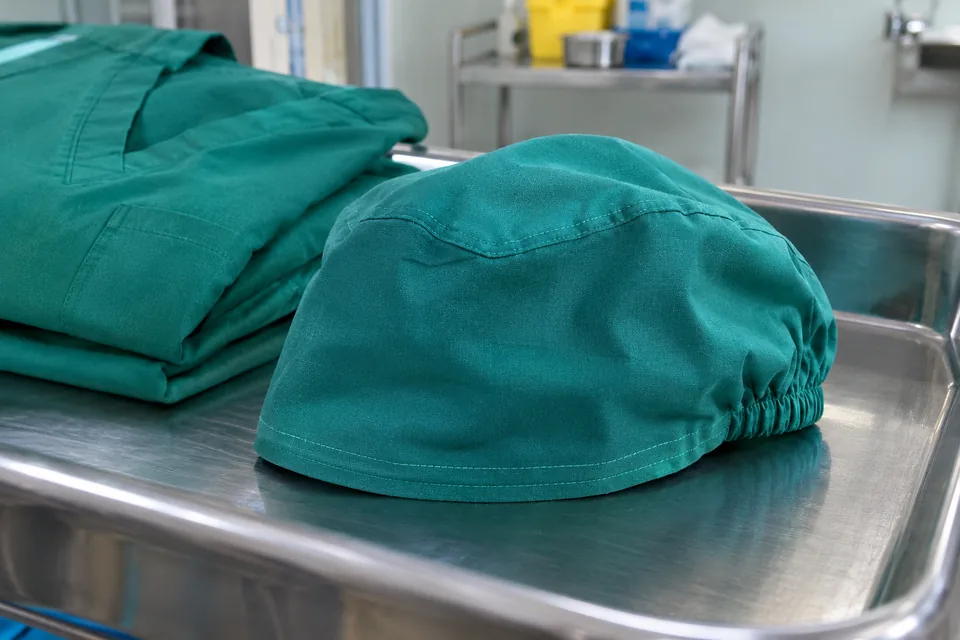
| Beanie / skull cap | Close-fitting, follows the shape of the head | Short hair |
| Disposable caps | Thin, single-use, usually elastic | Areas where your hospital requires single-use caps |
Where disposable caps are required, a cloth cap is not a substitute. Follow your hospital’s uniform and infection-control policy on which caps are allowed where.
Our cap
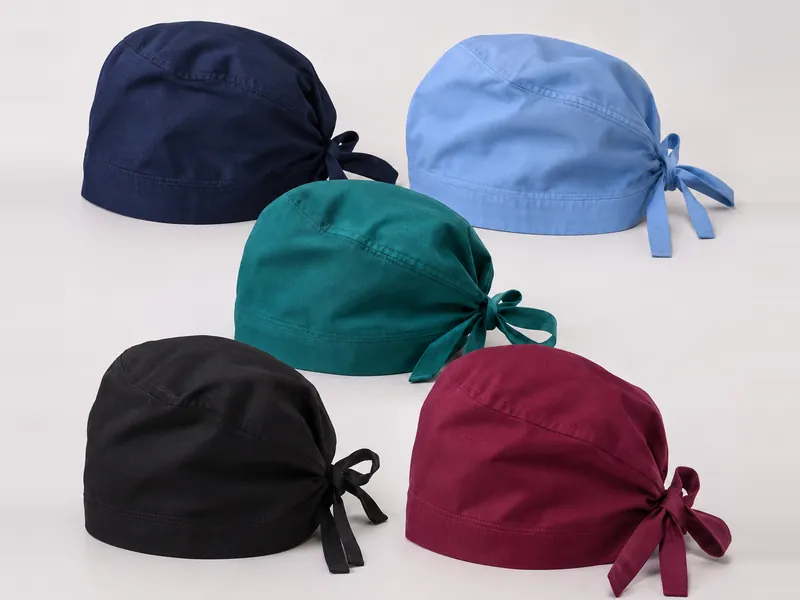
We make the tie-back style. Our scrub cap is free size and comes in navy, teal, wine, ceil blue and OT green, so it can match ward scrubs or an OT dress. We chose tie-back because it adjusts to most heads and survives repeated washing well.
How to wear a tie-back cap properly
- Tie your hair first. A low bun or ponytail at the nape works best. High buns push the cap up.
- Place the front edge just above your eyebrows or at your hairline.
- Pull the cap back over the crown so the fabric covers your hair evenly.
- Bring the ties round under the bun or at the nape and tie a bow, firm but not tight.
- Tuck in loose strands at the sides and back.
If the cap keeps sliding back, tie it a little lower at the nape. If it leaves a mark on your forehead, loosen the knot slightly.
Caps for different hair
- Short hair: a tie-back cap fits neatly with no fuss.
- Medium hair: tie a low bun; the cap covers it comfortably.
- Long, thick hair: pin a flat bun low at the nape. If it still does not fit, you may prefer a bouffant style for theatre.
- Hair under a headscarf: follow your hospital’s guidance; many staff wear a fitted under-scarf with a cap or hood as allowed by their department.
Washing and keeping caps fresh
Cloth caps sit against your hair all shift, so wash them after every use, along with your scrubs. Wash warm with similar colours and do not bleach coloured caps. Having a few caps means you always have a clean one. Many nurses keep one per scrub set, so cap and scrubs go into the wash together.
Wrapping up
The tie-back cap fits most heads and most hair lengths, adjusts with a simple knot and washes well. Bouffant and disposable caps have their place where hair is long or rules require single-use. Pick a colour to match your set from the scrub cap page, or read our guide to choosing a scrub cap colour first.