Fabric & care
Should you iron scrubs?
After a long shift and a load of laundry, ironing feels like one job too many. Many people skip it entirely with their scrubs. Others press every set with sharp creases like an old-style nurse’s uniform. So which is right?
The honest answer: it depends on the fabric, how you dry it, and how your workplace expects you to look. Here is a practical way to decide.
Why poly-cotton often needs little ironing
Our scrubs are made from poly-cotton, a blend of polyester and cotton. The polyester part resists creasing, so a poly-cotton scrub that is dried well often looks fine straight off the hanger.
What helps most:
- Take scrubs out of the machine promptly. Creases set when wet clothes sit crumpled.
- Shake each piece firmly before hanging.
- Hang tops on hangers and smooth the collar and pockets with your hand.
- Hang pants by the hem so their own weight pulls out light creases.
Done this way, many sets need only a touch-up or nothing at all.
When ironing is worth it
There are good reasons to iron:
- Monsoon drying. A warm iron finishes off fabric that is nearly dry and removes the damp feel.
- First impressions. Interviews, clinical exams, inspections or your first day on a new ward.
- Uniform rules. Some hospitals and nursing colleges expect a pressed look. Follow your institution’s uniform policy.
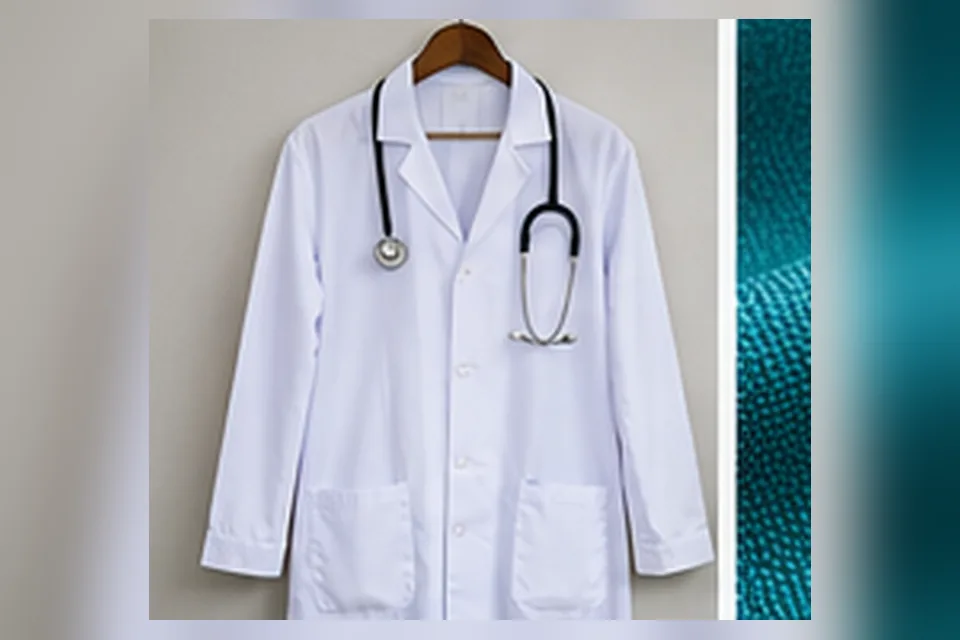
- Coats. A doctor coat or lab coat looks much smarter pressed, especially at the collar and front edges.
- Name embroidery. A light press around it keeps the area flat.
How to iron scrubs safely
Our care label says warm iron. That means a medium setting, not the hottest.
- Turn the scrub inside out. This protects colour and avoids shiny patches on dark shades like navy and wine.
- Iron while very slightly damp for the easiest result, or use a little steam.
- Start with the small parts: collar, pocket edges, sleeves.
- Then the body, front and back, moving the iron rather than pressing in one spot.
- Pants: iron the waistband area lightly, away from the elastic, then the legs.
- Hang immediately so new creases do not form.
Things to avoid
- A very hot iron. It can leave shiny marks and damage the polyester in the blend.
- Ironing directly over embroidery or logos. Iron around them, or put a cloth on top and press from the back.
- Ironing over stains. Heat can set blood, Betadine or ink permanently. Remove stains first.
- Pressing hard on the elastic at the back of the pant. Heat weakens elastic over time.
A quick decision table
| Situation | Iron? |
|---|---|
| Everyday ward shift, dried well | Usually not needed |
| Monsoon, slightly damp | Yes, warm iron to finish |
| Exam, interview, inspection | Yes |
| Doctor or lab coat | Yes, especially collar and front |
| Stained garment | No, treat the stain first |
Save time without looking crumpled
- Fold scrubs neatly straight off the line, rather than leaving them in a heap.
- Keep one pressed set ready for unexpected important days.
- In a hostel, a shared steam iron used once a week for the whole pile saves time.
The verdict
You do not have to iron poly-cotton scrubs every time. Good drying habits do most of the work, and a quick warm press covers special days and monsoon weeks. For the full care routine, read our guide on how to wash scrubs after a hospital shift.